Amanda Cheatwood
Oct 1, 2026
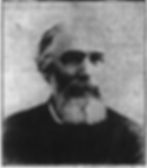
Edward Kimball (teacher)
July 29, 1823 – June 5, 1901
The Sunday School Teacher Who Walked Back Through the Door
A Faithful Man in an Ordinary Place
Edward Kimball holds a quiet but remarkable place in the history of American revival. He preached no crusades and led no movements. He was a Boston businessman, a church officer, and a Sunday school teacher at Mount Vernon Congregational Church, where he faithfully taught a class of teenage boys. Through one of those boys, his influence reached around the world.
His faithfulness in a small classroom became the first link in a chain of revival that would stretch across a century.
Among the young men in his class was a country boy named Dwight Lyman Moody, who had come to Boston at seventeen to work in his uncle’s shoe store. Moody knew very little of Scripture. On one of his first Sundays, when the class turned to the Gospel of John, he searched near the front of the Bible while the other boys laughed. Kimball quietly handed him his own Bible, already opened to the passage, and asked him to read. Moody remembered that kindness for the rest of his life.
The Afternoon at the Shoe Store
On April 21, 1855, Kimball resolved to speak with Moody about his soul. He walked to Holton’s shoe store, then hesitated, concerned about embarrassing the young clerk in front of his coworkers. He walked past the door. Then, in his own words, he decided:
“…to make a dash for it and have it over at once.”
He found Moody in the back room, wrapping shoes and placing them on the shelves. Kimball rested a hand on his shoulder and spoke simply of Christ’s love. There in the stockroom, Moody surrendered his life to Jesus.
Revival often begins with one person willing to be uncomfortable for a few minutes.
A Harvest Beyond Measure
Moody moved to Chicago the following year and gave himself to the work of the gospel. He gathered street children into Sunday schools, ministered to soldiers during the Civil War, and preached to vast crowds in America and Great Britain. He founded schools in Northfield, Massachusetts, and the institution that became Moody Bible Institute. He is believed to have led as many as a million people to Christ.
Church history has long traced a line of influence from that stockroom onward: from Moody to F. B. Meyer, to J. Wilbur Chapman, to Billy Sunday, to Mordecai Ham, and to a teenage Billy Graham, who came to Christ in Ham’s 1934 meetings in Charlotte, North Carolina. Some links in that chain are threads of influence more than single moments, and together they form one of the most beloved pictures of how the fire of revival is passed from hand to hand.
The Seed Returned
Years later, around 1871, Kimball’s seventeen-year-old son Henry attended a meeting where Moody was preaching. Afterward he introduced himself as the son of Moody’s old Sunday school teacher. Moody asked whether he was a Christian, and when Henry said he was uncertain, Moody sat with him and led him to Christ.
The boy Kimball reached in a stockroom became the man who reached Kimball’s own son.
A Life of Steady Service
Kimball later settled in Chicago and devoted his final decades to an unusual ministry, helping churches across the country free themselves from heavy debt so they could return their full attention to the work of the gospel. When he died in 1901, he was remembered as a noted helper of churches.
His life was marked by faithfulness in small things: a classroom, a borrowed Bible, a hand on a young man’s shoulder.
Why His Example Remains
In remembering Edward Kimball, we honor the countless teachers, mentors, and quiet servants whose names rarely appear in the history books and whose faithfulness fills them. Every revival begins with someone willing to speak. Somewhere today, a young person is waiting in the back room for someone to walk through the door.
“And the things that thou hast heard of me among many witnesses, the same commit thou to faithful men, who shall be able to teach others also.” 2 Timothy 2:2 (KJV)